What is Composting?
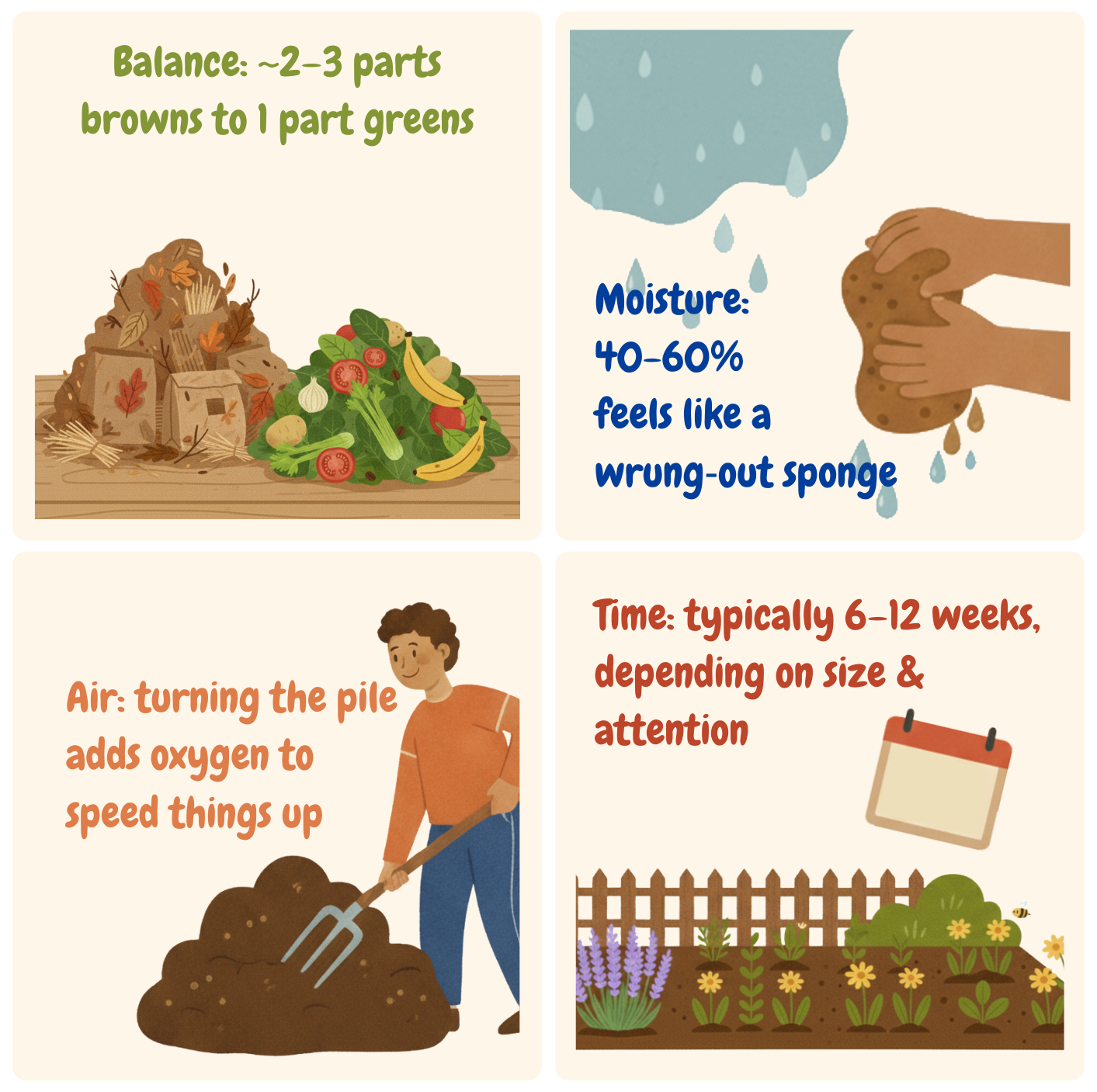
Composting is a natural recycling process where microbes (and sometimes worms!) break down organic materials—like fruit peels, coffee grounds, and dry leaves—into dark, crumbly soil-like material called compost. It works best with a simple balance of “browns” (dry, carbon-rich) and “greens” (fresh, nitrogen-rich), plus a little air and moisture.
Composting Methods at a Glance
Hot (Thermophilic)
Large, well-balanced piles heat to 55–65 °C with regular turning and moisture management.
- ✅ Fast (≈6–12 weeks)
- ✅ Can reduce many seeds/pathogens
- ⚠️ Needs frequent turning & close monitoring
Great results, but hands-on—less viable for our volunteer-run park setup.
Worm (Vermicomposting)
Red wigglers (Eisenia fetida) digest food scraps in a bin to make rich worm castings.
- ✅ Ideal for flats/small spaces
- ✅ Produces premium “vermicompost”
- ⚠️ Go easy on citrus/onion; no meat/dairy
Best as an at-home method; not our on-site system.
Cold/Passive
Add scraps over time with regular layers of browns; minimal turning.
- ✅ Low effort, reliable
- ⚠️ Slower (months), lower temperatures
- ⚠️ Higher chance of some seeds surviving
Our site: We use a managed passive approach—consistent browns on top, occasional turn for airflow, and moisture checks.
Bokashi (Pre-Ferment)
In a sealed bucket with EM (effective microbes), food—including meat/dairy—ferments. The pre-treated material is then buried or finished in a compost system.
- ✅ Handles “tricky” foods in a sealed system
- ⚠️ Needs a burial/finishing step
At home: Bokashi is a good way to deal with meat/dairy safely.
Trench/Sheet
Scraps are buried directly in soil or spread thinly and covered with mulch/soil.
- ✅ Very simple; no bin needed
- ⚠️ Needs garden space; avoid plant roots
Good for private gardens; not suitable for a shared park space.
Industrial/Facility
Large, controlled systems (often aerated) that can process mixed organics, including compostable packaging.
- ✅ Can take meat/dairy & certified compostables
- ⚠️ Requires specialised equipment & permits
Not available for household drop-offs locally; community composting fills the gap.
What we use: A passive (cold) composting setup with kitchen scraps layered with dry browns, lids closed, and light turning to keep air moving. This keeps odours low and the workflow simple for volunteers.
About meat & dairy: Safe in industrial or tightly managed hot/sealed systems (or via Bokashi at home), but not accepted at our community site to prevent odours and pests.